5 Must-Have Essentials for Your Baby’s First Wardrobe: Building a Practical Layette
Staring at tiny outfits in a store can feel like a whirlwind. You want everything cute, but your newborn needs simple, safe clothes that handle spit-up and midnight changes. This guide cuts through the chaos to spotlight newborn essentials for baby’s first wardrobe. We’ll focus on five key items that build a smart baby layette must-haves list. Think comfort, easy access, and fabrics that soothe delicate skin. No need for a closet full of frills—just practical picks that let you bond without the stress.
The Foundation: Prioritizing Sleepwear Comfort and Safety
Newborns spend most of their early days asleep. So, sleepwear tops the list of baby layette must-haves. These pieces keep your little one snug while meeting safety rules. Pick soft options that wick away moisture and allow free movement.
Zipper vs. Snaps: The Convenience Factor
Footed pajamas come in zipper or snap styles. Zippers run from neck to toes, making quick changes a breeze in the dark. They save time during those 2 a.m. wake-ups. Snaps, on the other hand, avoid cold metal against skin but take longer to undo. Some parents mix both for variety.
Go for a 3:1 ratio of zippers to snaps at first. This setup boosts efficiency without skimping on comfort. You’ll thank yourself after the tenth diaper swap.
Understanding Flame Resistance and Material Choices
Safety matters in sleepwear. Look for items labeled flame-resistant or snug fits that meet U.S. standards. These reduce fire risks without harsh chemicals. Cotton rules here—100% or organic—for its breathability on sensitive skin.
Doctors often stress breathable fabrics to cut SIDS risks. Airflow helps babies stay cool and safe at night. Skip synthetics that trap heat.
Quantity Checklist for Sleepsuits
Plan for messes. Newborns spit up often, so laundry runs constant. Stock 6 to 8 sleepers to cover a week. Wash in gentle cycles to keep them fresh.
This number lets you rotate without worry. Add a few extra if your machine lags. Comfort wins every time.
Easy Dressing: The Importance of Overalls and Bodysuits
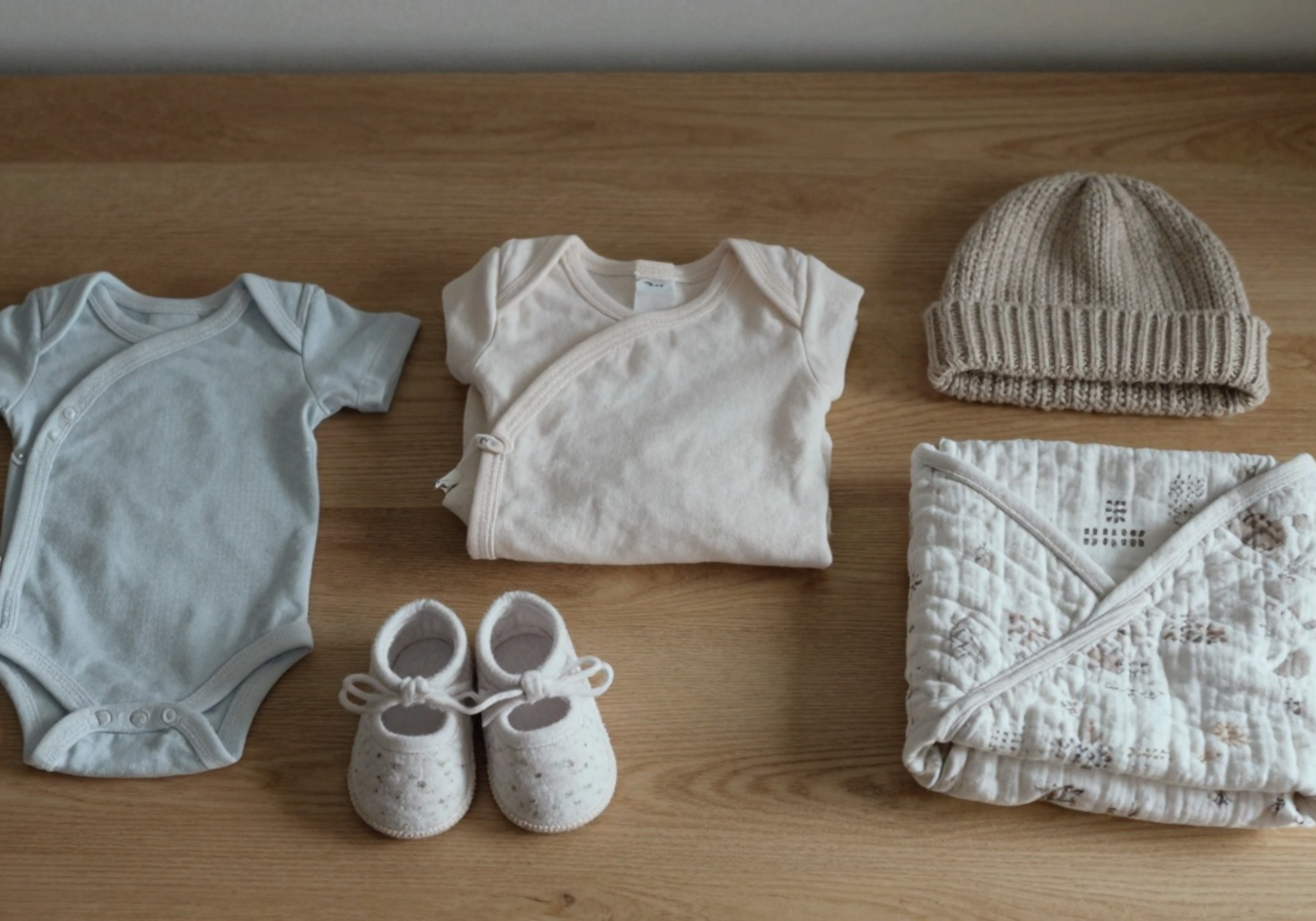
Daytime calls for layers that adjust to quick temperature shifts. Bodysuits and overalls form the base of baby’s first wardrobe. They snap at the crotch for easy access and layer well under sleepers.
These under-layers protect against leaks. Choose stretchy fits that grow with your baby. No tight spots around the belly.
Kimono-Style vs. Over-the-Head Bodysuits
Kimono bodysuits snap at the shoulders. They suit newborns with wobbly necks—no pulling over the head. This style eases dressing for tiny heads.
Standard onesies work later, around one to two months, when neck strength builds. Start with kimono for those first weeks. It prevents tears during fussy fits.
Lap Shoulder Necklines: The Lifesaver Feature
Lap shoulders let you pull clothes down over the legs. Perfect for blowouts that reach the neck. No need to lift arms through mess.
Picture this: Diaper disaster hits mid-feed. Slide the bodysuit down, clean up, and redress fast. This design saves sanity.
Essential Short-Sleeve vs. Long-Sleeve Ratios
Match sleeves to your weather. In mild spots, grab more short-sleeve for layering. Long ones shield arms from chill.
Aim for half and half if seasons vary. Layer under a sweater for outings. Your baby stays just right.
Temperature Control: Socks, Mittens, and Outer Layers
Babies can’t regulate heat well yet. Socks, mittens, and wraps help maintain warmth. These small items prevent cold toes or scratches.
Focus on snug fits that stay put. Outer layers add flexibility for car rides or strolls.
The Mystery of Newborn Socks and Booties
Socks slip off tiny feet like magic. Opt for cuffs that gather at the ankle. Or pick sleepers with feet built in.
Mittens curb nail scratches too. Babies come with sharp claws. Soft ones keep faces safe until trim time.
Swaddles and Sleep Sacks: Safe Sleep Layers
Swaddles wrap tight for that womb feel, but babies outgrow them fast. Switch to sleep sacks with zippers. They mimic security without loose fabric.
The American Academy of Pediatrics warns against blankets in cribs. Sleep sacks fill that gap safely. Use them up to six months or more.
The Versatile Outer Cardigan or Sweater
One or two cardigans do the trick. Soft knits button up for quick adds. Easy to slip off in warm rooms.
Skip bulky coats in car seats—they bunch and overheat. Cardigans layer light for safety. Perfect for short trips.
Material Science: Choosing Fabrics for Delicate Skin
What touches skin matters most. Fabrics in baby’s first wardrobe need to be kind. Hypoallergenic picks last through washes and cuddles.
Durability counts too. Babies grow quick, but clothes should hold up.
Organic Cotton vs. Standard Cotton
Organic cotton skips pesticides. GOTS certification means cleaner fibers for rash-prone skin. It costs a bit more, but peace of mind pays off.
Standard cotton works fine if pre-washed. Both breathe well. Prioritize organic for direct contact pieces.
Why Wool is the Unexpected MVP (Merino)
Merino wool regulates temp naturally. It wicks sweat and stays soft. Unlike fleece, it doesn’t itch.
Fine merino suits hot or cold babies. Layer it thin for versatility. A wool hat or sweater shines in winter.
Durability and the High Wash Cycle
Clothes face daily spins. Look for double-stitched knees and strong snaps. They survive tumbles without fraying.
Test for color fastness too. Pastels fade less. Quality lasts beyond the newborn phase.
Building the Minimalist Capsule Wardrobe (The Shopping List)
Tie it all together with a simple plan. Quality beats piles of cheap buys. This capsule keeps things lean for new parents.
Shop smart to avoid waste. Focus on versatile newborn essentials.
The “7-Day Cycle” Approach to Inventory
Buy enough for five to seven days. This covers laundry delays without stress. No digging for that last clean outfit.
Rotate items daily. It spreads wear evenly. Your routine smooths out.
Sizing Strategy: Don’t Overbuy Newborn Size
Newborn sizes fit just weeks. Many babies stretch to 0-3 months fast. Save cash—buy few in newborn.
Get three to four newborn pieces max. Load up on 0-3 for longer use. Check weight charts for your baby’s stats.
The Final Essentials Checklist (Quantity Summary)
Here’s your quick list for baby layette must-haves:
- Sleepers: 7 footed ones (mix zippers and snaps)
- Bodysuits: 6 (3 short-sleeve, 3 long-sleeve, kimono style)
- Pants or Overalls: 5 pairs (soft cotton, elastic waists)
- Socks and Mittens: 6 pairs each (gathered cuffs)
- Outer Layers: 2 cardigans or sleep sacks
This setup covers basics. Add swaddles if needed. Total cost stays low with smart picks.
Conclusion: Dressing for Connection, Not Perfection
A solid baby’s first wardrobe eases your early days. Prioritize sleepwear, bodysuits, and layers for comfort and safety. Stick to breathable fabrics like cotton or merino to suit delicate skin.
Remember, outfits serve bonding time. Simple choices let you focus on snuggles over stains. Grab these newborn essentials now—your baby will thank you with smiles. Start building that layette today and enjoy the ride.